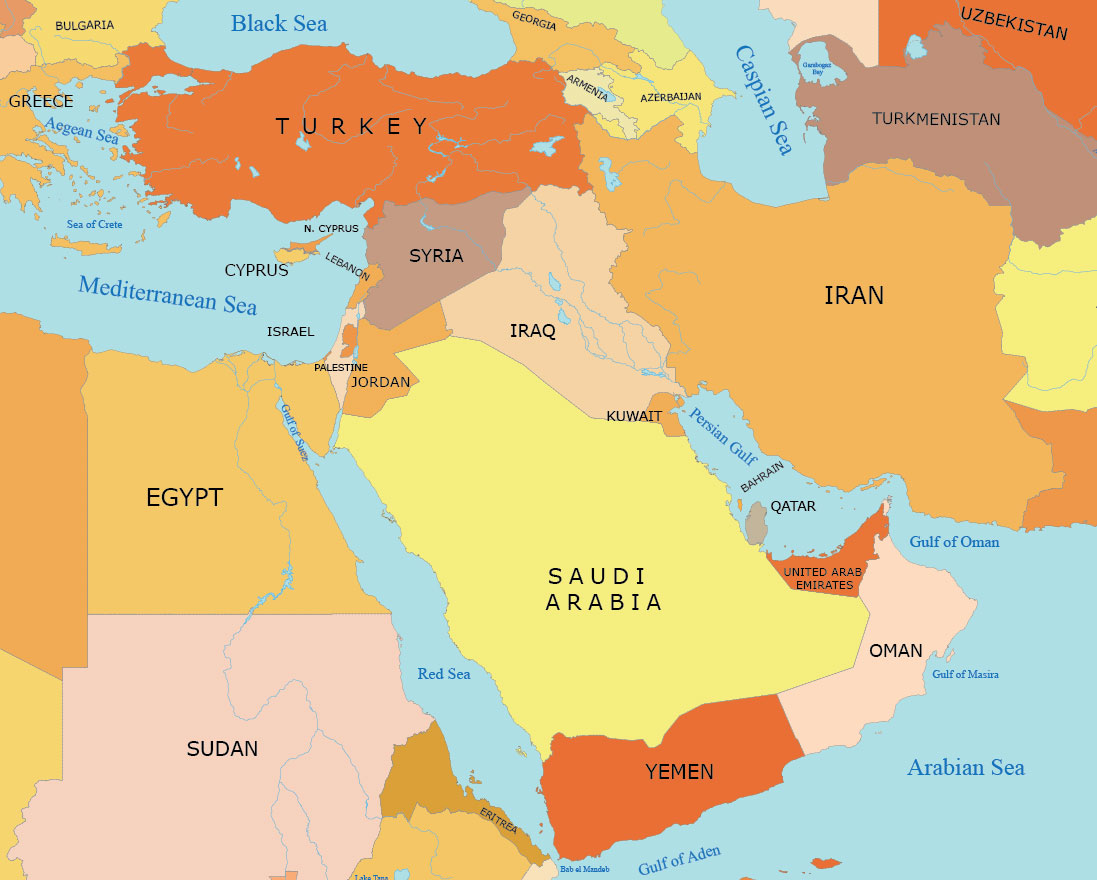
On Feb. 28, 2026, the United States, in coordination with Israel, launched a joint air campaign against Iran, killing Supreme Leader Ali Khamenei and several other high-ranking Iranian officials. Iran quickly retaliated, firing missiles at Israel and many U.S. bases across allied Gulf states. Iran also launched cyberattacks against American companies and blocked the passage of ships through the Strait of Hormuz — a critical choke point through which about one-fifth of the world’s oil supply passes.
Since Feb. 28, the U.S. has continued to escalate the conflict, with President Trump making repeated threats that if Iran does not reopen the Strait of Hormuz, “a whole civilization will die tonight” and “they’re going back to the stone age.” Iran has similarly signaled confidence in its ability to win the war, ignoring Trump’s deadlines to negotiate and striking ships attempting to pass through the strait with drones and missiles. The consequences of restricted access to the strait have included soaring oil and gas prices, with the potential to cause further economic damage. On Monday, the U.S. implemented a naval blockade against Iran, effectively closing the Strait of Hormuz and ports farther east to all Iranian tankers. This is expected to further disrupt oil prices, as Trump had previously allowed Iran to export oil to increase global supply.
What began as an attempt to swiftly remove Ali Khamenei from leadership in Iran, similar to how Nicolas Maduro was removed from Venezuela, is now quickly spiraling beyond President Trump’s control as the U.S. runs out of easy options. Trump is now left with three difficult choices.
One option is to ignore Iran’s threats and escort ships through the strait with the U.S. Navy. The U.S. has done this in the past. From 1987 to 1988, during the Tanker War, the U.S. successfully protected shipping from Iranian attacks through naval escorts. However, this is not the same Iranian Revolutionary Guard the U.S. Navy faced in the past. Since the 1980s, Iran has invested heavily in small boats, submarines, mines, drones, and missiles, making it much harder to protect oil tankers, even with advanced Patriot interceptor missiles. Iran possesses an estimated 1,800 to 3,000 ballistic missiles and thousands more drones that the U.S. would need to intercept. Given these large stockpiles, it is likely that at least some drones and missiles could bypass American defenses, as has already occurred with land-based targets.
Another challenge for the U.S. is its own supply of air defense interceptors. The U.S. had a stockpile of 414 SM-3s and 534 THAAD interceptors in December. Since the start of the war, about 25% of that supply has been used, meaning production would need to increase to sustain this strategy. If Trump chooses this option, two key steps would be necessary: forming a multinational task force to help escort tankers and securing congressional approval for increased military funding, as these interceptors are expensive. Basic Patriot PAC-3 missiles cost about $3.7 million, while advanced SM-3s can cost up to $9.5 million per missile.
Because a naval escort strategy may not be immediately feasible, Trump could consider deploying ground forces. There are three potential targets, each representing a different strategy. The first is Kharg Island. Capturing Kharg Island would cut off about 90% of Iran’s oil exports, a major source of revenue for the Islamic Revolutionary Guard Corps. The U.S. has already conducted strikes on the island and recently deployed an additional 3,500 Marines to the region, signaling the potential for a landing or paratrooper assault.
Another option would be to capture islands within the Strait of Hormuz, which Iran has used to control access to the waterway. These islands could serve as staging grounds for defending the strait or as leverage in negotiations. A third, less likely option would involve sending U.S. special forces deep into Iran to extract enriched uranium. This would be extremely difficult, as the uranium is stored deep underground at a site previously targeted in June 2025. With entrances destroyed, accessing the material would be a major challenge. However, if successful, it could provide a significant strategic advantage and strengthen the U.S. position in negotiations.
Trump’s final option is to negotiate an end to the war as quickly as possible. This would likely require the U.S. to reconsider its hardline stance on Iran’s nuclear program. Currently, Iran has refused to abandon its nuclear ambitions. From Iran’s perspective, Trump is not viewed as a reliable negotiating partner, given that he withdrew from the 2015 Joint Comprehensive Plan of Action during his first term. That agreement lifted some sanctions on Iran in exchange for limits on nuclear activity. Since its collapse, Iran has increased both the level of uranium enrichment — reaching about 60% U-235 — and its stockpile, estimated at 440 kilograms.
It is also important to note that when the current conflict began, the U.S. and Iran were already engaged in negotiations for a new nuclear deal. These past failures make future agreements more difficult. At the same time, Trump has made it clear that denuclearizing Iran remains a primary objective, repeatedly stating that Iran “cannot have a nuclear weapon.” With both sides unable to reach an agreement in Islamabad over the weekend, a diplomatic resolution appears unlikely in the near term.
Whichever path the U.S. chooses, it must act quickly. About 4% of the global oil supply comes from Iran, meaning gas prices are likely to continue rising. This will affect countries worldwide, increasing pressure on the U.S. to find a resolution. One early lesson of this conflict is that quick and simple operations can evolve into prolonged and costly wars. If the conflict continues, the U.S. may find itself stuck in the “dire straits” of Hormuz.